Nobel Prize jewelry 2026
The Nobel Prize in Physiology or Medicine in 2026 was awarded to Karl Deisseroth, Peter Hegemann and Georg Nagel “for their discoveries concerning light-gated ion channels and optogenetics”.
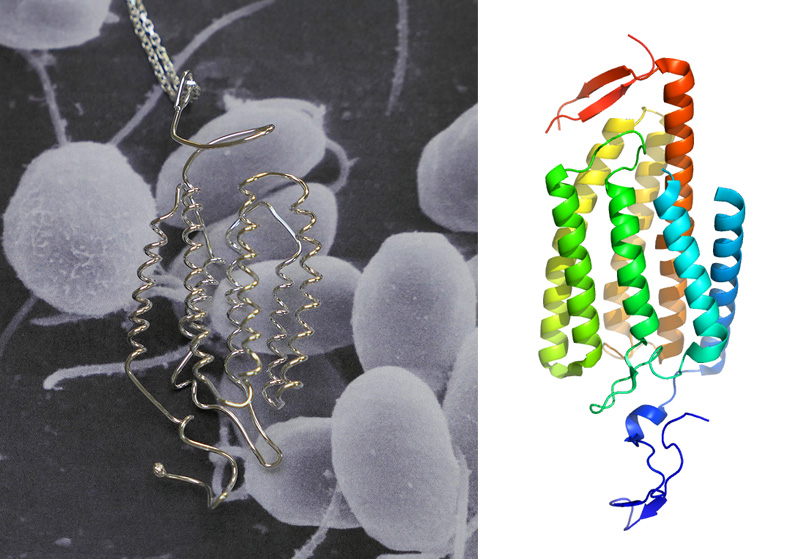
They are being rewarded for the discovery of the Chlamydomonas protein, channelrhodopsin. Channelrhodopsin forms light-gated ion channels that open in response to light. Karl Deisseroth transformed the protein into a light-controlled switch for nerve cells. The Nobel laureates have laid the foundation for a new era in neuroscience.
Nobel prize jewelry shows the three dimensional structure of the protein channelrhodopsin, in silver 925. Shown here on an image of the alga Chlamydomonas.
.
.
.
The Nobel Prize in Physics in 2026 was awarded to Francis Halzen “for decisive contributions to the IceCube Neutrino Observatory and the discovery of high-energy neutrinos of astrophysical origin”.
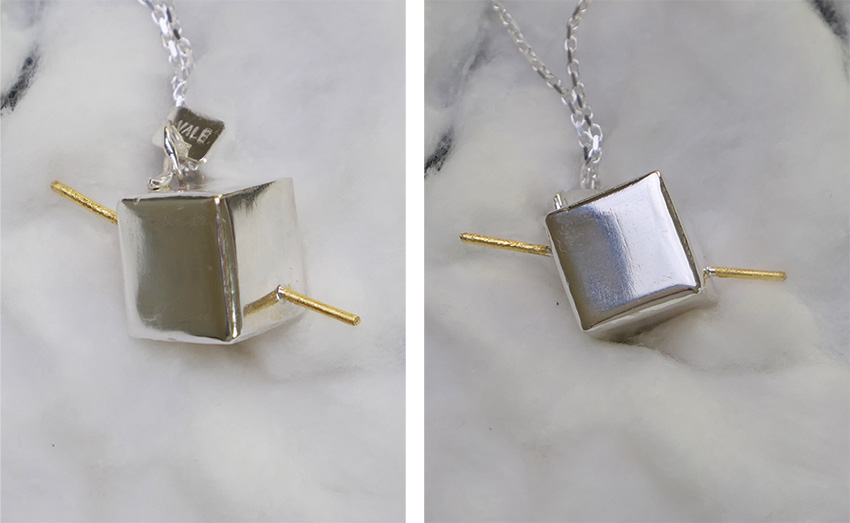
The IceCube Neutrino Observatory consists of a cubic kilometer of ice equipped with light sensors. With IceCube, researchers can capture neutrinos from extremely high-energy processes far out in the universe.
This year’s Nobel jewelry is an IceCube made in silver 925 sheet, with a neutrino track in silver wire covered with 23K gold leaf.
.
.
The Nobel Prize in Chemistry 2026 was awarded to Henri Kagan and Kenso Soai “for the discovery of non-linear effects and autocatalysis in asymmetric organic synthesis”. They have shown how homochirality can arise spontaneously.
Kenzo Soai designed the first chemical reaction—the Soai reaction—in which chiral molecules were created from a non-chiral mixture, and in which only one of the two possible mirror-image forms was produced.
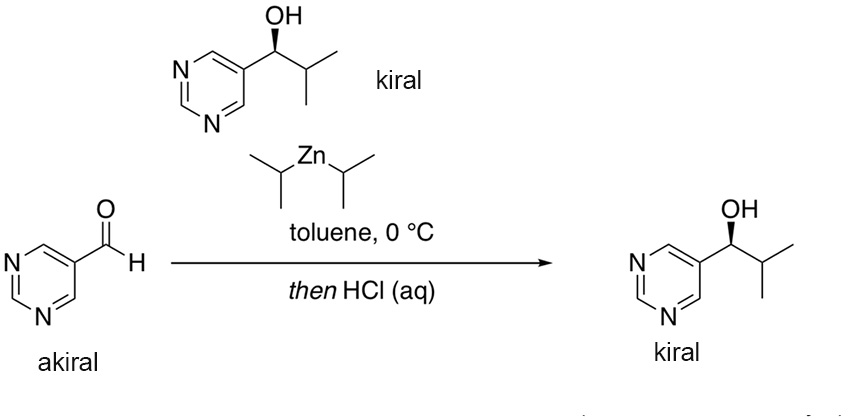
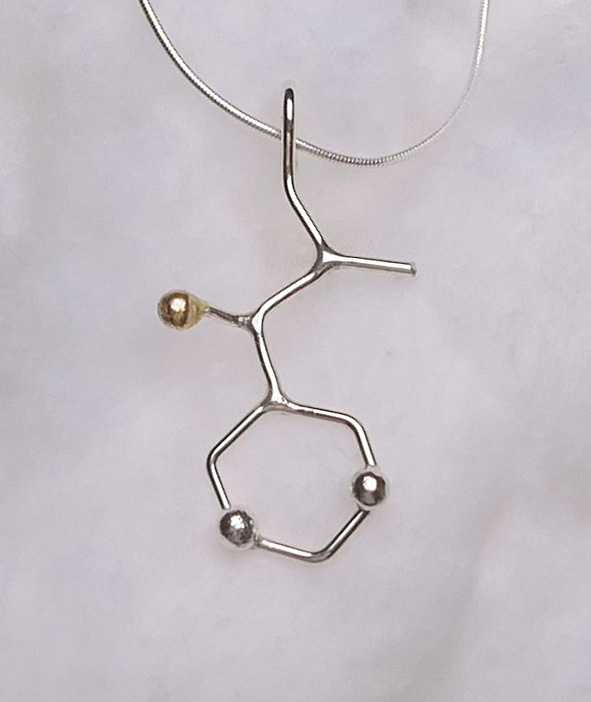
This year’s Nobel Prize jewelry shows the product of the Soai reaction: a pyridyl alkanol. The molecule is chiral, with the nitrogen atoms represented as 925 silver spheres and the OH group as an 18K gold sphere.
 English
 Swedish